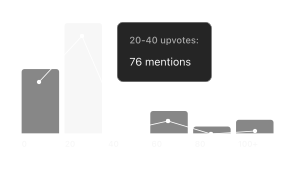
What Redditors are SayingTL;DR Begin with bouldering or top rope climbing at a gym, take introductory classes, and gradually build your skills and confidence. Safety is paramount, so learn from experienced climbers or instructors.
Start at a Climbing Gym
Climbing gyms are an excellent place for beginners to start. They provide a controlled environment where you can learn the basics of climbing safely. Many gyms offer rental gear like shoes and chalk bags, which means you don't need to invest in equipment right away [2:4],
[3:1]. Additionally, gyms often have introductory courses that teach fundamental techniques and safety practices
[5:1],
[5:3].
Bouldering vs. Top Rope Climbing
Bouldering is a popular entry point for many new climbers because it doesn't require a partner and involves shorter climbs over padded mats [3:2]. However, it's important to note that bouldering carries a higher risk of injury due to ground falls
[3:2]. Top rope climbing, on the other hand, requires a partner but is generally considered safer as you're secured by a rope from above
[5:1]. Starting with top rope climbing can help build endurance and confidence before progressing to lead climbing
[5:2].
Take Classes and Learn from Others
Taking a class at a climbing gym can be incredibly beneficial. Instructors can teach you proper techniques, safety protocols, and how to use climbing equipment correctly [1:1],
[5:3]. Even if you prefer learning independently, engaging with the climbing community can provide valuable insights and support. Most climbers are friendly and willing to share advice with newcomers
[2:1].
Safety Tips
Safety should always be your top priority when climbing. Make sure to rest adequately between sessions to avoid injuries, especially to your fingers and forearms, which may not be used to the strain [2:3]. Follow gym etiquette, such as taking turns on routes and avoiding standing where someone might fall
[2:2]. If you decide to venture outdoors, ensure you have the necessary skills and equipment, and consider going with more experienced climbers
[4:4].
Progress Gradually
As you become more comfortable with climbing, you can explore different styles and increase the difficulty of your climbs. Focus on mastering basic techniques before moving on to more advanced challenges [2:4]. Building a solid foundation will make your climbing experience safer and more enjoyable in the long run.
POST SUMMARY • [1]I know nothing about proper techniques and skills. Where do i even get started?? I love climbing structures at work and in nature, i wanna tackle some crazy ass cliffs. Where do i start???? Where do i get supplies!? Thanks in advance
I am an climbing instructor and felt the eau you feel in the beginning. It is a bit of a slow process to learn but since it all comes down to safety it is worth the wait. I recomend to take a course at your local climbing club to learn lead climbing. When you got the hang of that youre almost good to go. Find gear online from known brands as DMM, PETZEL, BLACK DIAMOND ETC. buy shoes at you climbing gym so you can try them first. Train leadclimbing and then i recomend a traditional climbing course. Then youre good to go ;)
I’ve been following a couple of climbers for awhile and finally decided to get over my nerves - I don’t want to watch other people climb anymore, instead I want to start doing it myself.
There’s a really cool climbing gym near me that I walk past everyday and want to try. I guess I’m nervous of going in and looking like an idiot? Should I look into coaching/classes or is bouldering something you can kind of figure out as you’re doing it and with support/advice of other climbers? Also, is there any gear that is a must? They have 👞 hire and chalk bags included in their entry fee, but it’s definitely something I’d like to look into eventually (if I end up going regularly).
I’m big into lifting and feel like I know the “etiquette” of bodybuilding gyms, but this is a whole new world and I don’t want to stick out like a sore thumb lol.
Thanks in advance friends!
I probably forgot some things but you will be fine
Maybe also: don't climb a route someone just brushed before they give it a go
Seems unlikely to come up on someone's first few visits. Not a lot of people brushing V0 - V3
>take turns climbing, don't block people from climbing their project by trying yours 5 times in a row
If it's not very busy, you can try the start a couple times if you've taken less than the time it would take to climb the full route.
> Don't wear climbing shoes on the toilet.
What else? I only have my climbing shoes or my bare feet and the choice here is obviously not bare feet.
You’re telling me you don’t have any other footwear with you when you’re at the climbing gym?
Go have fun, and make sure you get adequate rest between sessions. As someone who’s already strong there’ll be a temptation to “go hard” to try to get the same workout for your major muscle groups, but initially your finger tendons and forearm muscles are going to be a significantly weaker link and they develop slowly (especially the finger tendons). Non-climbing specific strength training doesn’t really work those tissues at all, so you’ll be at roughly the same risk of injury as any other new climber (but potentially with the downside of thinking those tissues are strong and overdoing it).
Source: climbed for a couple of decades before getting into strength training, and while I’ve gotten stronger overall, my reduced climbing time has meant my forearms and finger tendons have gotten noticeably weaker.
Nah, just show up and start climbing. Start with the easiest climbs there are and work your way up slowly. Get really really good at the easiest climbs. If you’re nervous just pretend you’re warming up, or doing a “volume day”.
If you can climb a ladder you should be all set to start. Just start.
I'm big/strong and just started climbing 2 weeks ago. The grip strength is definitely the biggest limiting factor, and after climbing 4-5 times last week my forearms need some time off. Definitely take it slow and if you feel your fingers/hands/forearms staring to feel really sore just stop. Look up some YouTube videos on beginner technique, you'll realize the biggest thing to focus on is your feet and hips. Just spend some time doing drills for those things
I'm a little taller than you but about the same weight, you'll be fine. Honestly having an overall athletic base is much better than coming in 20lbs lighter but no muscle. Pistol squats are an underrated ability for climbers.
Body shape doesn’t matter much until really elite levels. And even at those levels there’ve been some absolute units - Google Wolfgang Gullich, or even better Mike Law - these guys were chonky (and Mike is quite short)!
Also 2-3 times climbing a week on top of 5 days of strength training may be overdoing it, at least for the first few months. I think you might be pleasantly surprised how quickly and deeply your forearms get pumped that first visit - as Mike Law says “you’ll be so pumped you can’t pull the dick off a chocolate mouse” - and that effect is going to last for a couple of days. Lifting may be challenging during that time with your grip strength gone! 😉
No one is going to make fun of you for being a beginner. Climbing/bouldering is one of the friendliest communities around (imo).
I've been thinking about starting climbing, as its something I tried a few times as a kid and have the best memories doing. However, I'm now in my mid-late 20s, I don't have friends or family nearby who would go with me, and I'm nervous about getting started.
When I was younger, all I did was top rope climbing, but obviously that requires a partner. I had a friend from out of state suggest bouldering -- that's what she does because she doesn't need a partner to go climbing with. I've never thought about that before, but am curious to hear people's thoughts. Is it better to start with one or the other? How do people even find partners to climb with on top rope?
Also... what do I need to know going into a gym for the first time? Whichever one I start with, I'll likely go to a class the first time (there are two gyms nearby, one offers intro bouldering and the other offers intro top rope climbing). But are there specific things I should bring, wear, or know in terms of etiquette, etc? Any tips to help manage the anxiety of going into a climbing gym alone for the first time would be greatly appreciated <3
I’m so excited for you! I think a lot of people start with bouldering.. it’s an easier way to get started and I think it feels less scary for people because you don’t climb as high. I also feel like bouldering is really having a popular moment right now. All you need are shoes and a chalk bag and you’re set.
However, the main reason I don’t boulder is because there’s a higher risk of injury. Every fall is a ground fall, and every time I’ve gotten really injured climbing is been bouldering. Not to scare you, but since climbing is inherently dangerous it’s important to be aware of the risks. It’s also easy to fall off a climb and want to jump right back on without taking a break. It’s important to pace yourself and give yourself some rest time between climbs.
I almost exclusively rope climb(mostly top rope but I do lead occasionally, especially outside). Top rope climbing is probably the safest type of climbing out there. It’s definitely more endurance based and I love the partner aspect of it. You climb, then rest/belay while your partner climbs. I also enjoy longer but less powerful climbing.
I think it’s good to try both. Even if you get really into either bouldering or rope, it’s good to revisit the other every once in a while. I find it makes you a much more well rounded climber as they both have their skill sets.
That’s awesome!
Personally I find bouldering is more about power (short bursts of them) and rope climbing is more about endurance. Almost all rope climbing gyms will have bouldering walls too, but some gyms only have bouldering.
If you’re new you will most likely sign up to an intro course so hopefully you’ll meet people that way. Then some gyms will have coaching sessions, sometimes they’re free (!) my gym has a free female climbing coaching every Thu evening for example. Sometimes there are Meetup groups for climbing/bouldering, or you might even find a mountaineering club that meet regularly for indoor/outdoor climbing.
You can use the auto belays if you’re going solo. At the beginning you can hire shoes and harness…
Rad! Good on you for taking the steps to do something you want to, even though it's causing some anxiety. I personally (strongly) prefer gym bouldering so I always recommend that. If you go to an intro class, they'll definitely go over all the rules with you there. Even if you just sign up and walk in, they'll go over most things with you. I'd wear gym clothes that allow mobility; I'd rent shoes at first (eventually you'll want to buy a pair); I wouldn't worry about chalk at first (I didn't start using it for months); the main consistent rule is don't wear climbing shoes outside or into the bathroom. You don't really need to bring anything at most places (except maybe an ID and money), but calling to ask first just to make sure could reduce some stress + might enable a first time promo. It really is super straightforward, you kinda just go there, change your shoes, and try climbing marked routes until you don't feel like it anymore, then leave. Some easy tips off the top of the head, though:
I do top rope and enjoy it a lot - I personally prefer it to bouldering but it’s a personal choice. For partners, the gym I go to at least has some periodic meetups which can be a good place to find potential partners. Also it has some Facebook groups and one of the chats is a Women Climbers chat. The equivalent in your area, if it exists, may be a good place to start. Of course you can climb with men as well, but that might be easier to get started.
I did the exakt thing as you. Climbed a few times when I was a kid and now as 27 I started for real. It was even better than I remembered.
To begin, the gym lets ju rent shoes for a few dollar and that plus some stretchy clothes is really all you need to start climbing on the boulder walls.
Each group of colored holds are called a problem and they come in different difficulties. Usually marked with tape or a note. This will also tell you how to start. You need to have one hand on each taped grip. If both are on the same hold, you also place your hands on the same one. At the end there should be "top" and same here, both hands on that hold and your done. Be careful going down. It's recommended to climb down and not jump.
If you want to try top rope many gyms let you rent harnesses as well. And there is also an automatic belay device called auto belay in many gyms. This enables you to climb big walls without a partner. Don't forget to check the requirements your gym has in order to use them. Sometimes you need a short introduction course.
If tope rope really is what you like, there are plenty of options. Facebook groups, maybe you met someone bouldering (climbers are friendly!) or some gym even arrange meet and greet evenings to find a partner.
Now you might be at the stage where you want to buy your own stuff. NEVER buy PPE (ropes, harnesses or carabiniers) second hand. I can't put enough emphasis on that. Your life literally depends on it. However for shoes, clothes and chalk bags do whatever you prefer.
Have fun! Let me know if there is something else you wish to know. I was so anxious the first time it took me 1,5 year to actually go. And if I can help you in any way that would make me really happy. No question is to stupid.
First of all, please excuse any ignorance demonstrated in this post. I love the mountains, but sadly I don't have much experience actually climbing them.
I recently went on a trip to Colorado and attempted to climb Snowdon Peak. After two hours of climbing I found myself on its shoulder facing down a nasty looking exposed class 3 ridge. Seeing this after so much effort made me entirely reconsider climbing. Every trail I take has the potential to turn very scary and send me either home or out of this world entirely. I want to keep climbing, but I'm not sure how much risk I'm willing to tolerate if I'm going to be hiking tens, maybe hundreds of mountains over the course of my life.
I've often heard class 3 scrambling without equipment described as the most dangerous form of climbing since it's unprotected. If that's the case - what kind of equipment can make it less dangerous? I know that helmets and pads are a good idea, but what I really want is something that can prevent falls outright rather than mitigate the harm they cause.
One option I'm interested in is a rope with a self-belaying system so I can have some of the protection offered by ropes without relying on a partner. I literally only learned what that was yesterday, though, so I'm interested to hear others' thoughts and if there's other equipment that would serve this purpose better for class 3 excursions.
The advice I’ve been told and am currently following: take a few classes at a climbing gym.
I know it sounds wack, but knowing what your body is capable of on a sheer wall, what grip you have, what a good hold feels like… that’s supposed to help you feel more comfortable and keep you safer on a class 3 scramble.
Many people wear helmets on every class 3.
I also don’t understand how you can self belay up an entire mountain, but I’m still new to anything with a rope.
You probably know better than I do, but my notion was to keep it ready to hand and only deploy it in isolated, especially dangerous situations.
It seems like you kind of get it. You can add like a helmet, but that won't do a lot if you fall down a cliff, and the next real step up from that is rock climbing rope anchors which are expensive and complicated.
Honestly, If you aren't comfortable soloing a class 3 section, I'd just avoid them. Trying to set up a lead solo is time consuming and not super effective on that kind of terrain
u/Terentius-Varro - I agree. Granted, hiking is more of something I do socially, if other people want to, but I didn't encounter Class 3 terrain until I started rock climbing and since then it's really only been short sections while trying to access a crag.
I was curious, and looked up Snowdon Peak in AllTrails. Reviewers mention both the scramble and an alternate route. It's also an out and back route. So it sounds like you made the right choice when confronted with terrain you're not comfortable with and that is honestly fairly unusual for hiking.
Did you look it up? The first, and a very economical, piece of protection you can set is choosing mountains with hikeable summits.
I haven't personally tried to set rope protection for soloing. I know it's a thing but I've always climbed with partners if it's outdoors. ("Climb" in the sense of Class 5, I do hike solo on occasion but I'm not sure I exceed Class 1 in that case.)
Why not try some rock climbing? (Like in a gym.) It's fun and they can rent you all the gear. You do need someone who can belay you but climbers are often evangelists for the sport and the gyms in my area will even let you book a staff member (for a fee) if you want.
As far as setting protection on Class 3 terrain - yeah, I guess look up "lead solo." Probably takes at least $1000 worth of gear to get your feet wet. Obviously your life is worth more than $1000 but you can choose not to attempt technical summits by yourself for free.
So I've been bouldering (inside) for the past few months by now, and really want to try lead climbing as well. Does anyone have tips on how to get started?
You want to be comfortable on top rope first for sure. Top rope takes a lot more endurance than bouldering and lead takes a lot more endurance than top rope. Even a juggy 5.7 on lead can be pretty exhausting if you are not doing them frequently.
As far as lead goes, I recommend taking a class. When I took my lead class, we were on autobelay so we could do all the motions but have the safety of the autobelay. Even after I took the test, I still practiced clipping using a short section of rope while top roping and at home with a quickdraw hanging from a cabinet door for a while until I didn't feel clumsy clipping.
Also, the scariest part of lead climbing for me when I was just starting wasn't the climbing, it was belaying. Being responsible for the climber and catching their falls was really stressful the first few months. It took me a while before I felt really comfortable belaying. I short-roped my partner many many times in the beginning because I didn't want to have too much rope out.
That said, I really enjoy lead climbing. I hope you do start top roping and lead climbing and have fun.
Tysm for the advice!
Does your gym offer classes?
Only in bouldering, sadly
Call around to other gyms in your area. Lead climbing is dangerous and scary and so, so much fun. You really need someone to teach you in person because there is so much hands on learning. That can be a friend who has been lead climbing for years and you’re confident takes safety seriously, but it is nice to learn from someone that knows how to teach lead climbing to new climbers and someone who teaches classes at the gym is a decent bet at a good instructor.
definitely get comfortable on top rope first, then take a lead climbing class from a good gym. like others have said it's really dangerous if you don't know what youre doing.
Start with top roping. My gym requires that you’ve had your belay cert for 6 months before taking the lead belay class so that simply belaying on top rope is second nature. Lead belaying requires more manoeuvres and you need to be a solid belayer.
Oh and it would be good for you to build your endurance and just be confortable to climb routes before introducing clipping. Learning how to take good rests on the wall and managing your energy and your pump is important for lead.
Info: Lead or Toprope?
You need to have a a fair amount of experience toproping beg you do lead, my gym recommends you are fairly confident and consistently sending 5.10 routes without taking before they will allow you to take the lead series and as far as I know many will not allow you to climb unless they’ve cleared you for it, same for toperope and belaying TR.
Not sure what your experience is with toprope but if you haven’t already started and gotten belay certified I’d start with that and a harness. My hym has a few auto belays but they’re pretty limited so you’ll need to find a partner to a few to belay and belay you for a while if you want to get into lead climbing. Plus you’ll need the experience belaying toperope before you belay lead as (from what I’ve heard) lead can be much more challenging and complicated.
My gym offered the belay certification as a part of an intro class and has some social events that are toprope oriented if you don’t already have people in mind. There is also a women’s lead group that meets once a month at my gym.
I think this is just a very US centric comment, most gyms in Germany for example are exclusively lead. I think if possible one should just learn and lead as much as possible.
I live in the Netherlands and the US centric approach applies here as well. Or at least in the chain I go to, maybe other chains here have another approach.
I recommend trying top rope first, to get accustomed to the differences with low risk.
Last year climbed outdoors, loved it. This year have been out with club people and then signed up to a three day course on how to set gear for top/bottom/abseil ropes.
After this I went and bought myself DMM nuts and hexs/slings/hms carabiners. Clearly im missing static/dynamic rope. I'm not able to lead so I think thats maybe out the window for this summer. My instructor told me to get good/comfortable with anchor placements and rope/knots.
Current plan is to head to the crag along and equalise anchors, set up top/bottom ropes (with climbing just setting up). Then see when club people are going. watch and learn.
I'd say your doing actually exactly what I tell folks to do when they tell me they want to get into trad climbing.
Pickup some decent starter gear, and start placing it and get really good at anchor construction on the ground. The biggest barrier to entry is getting the gear in your hands, but purchasing some passive pro that lives on your rack forever is a good investment, and great way to start.
I have brought out gym climbers who absolutely crush (way harder than me), they lead and I get up to their anchor and its total garbage.
Keep up the good work!
Thanks, HVS 5a kicked my ass :( on rope so no way a good climber.
I was offered a chance to take a 2 day 'learn to lead' course - previous instructor told me it might be all too much too soon, and I'd get more from it doing it after a summer of placing my own ground gear. Guess im just excited but maybe best take it slow.
Take it slow, the rocks will be there when you are ready! And each year gear and innovations just get better and more efficient anyway.
If you have more experience placing gear, you'll be able to go deeper during the course. So yes, practice a lot so you'll have more questions for your teacher during the course!
Certainly not the way I would do things.
Anchors are an all or nothing proposition AND they are risking someone else’s life.
I think you are much better off learning to lead or aid and weighting your gear where blowing pieces isn’t immediately fatal.
Bonus points if you can practice somewhere with some bomber anchors or bolts and place gear above them to test safely.
Same, I went and got a rope and anchor material for top roping bolts, then lead in a gym, then sport lead, then got trad gear
Is there no sport climbing where you are? I learned to climb trad, and still can’t climb sport for shit, but I thought my path was odd. It seems like the normal progression is:
Top rope at the gym.
Lead at the gym.
Top rope outdoors.
Lead sport outdoors.
Somewhere along the way find a trad climber who needs a belay.
Follow trad outdoors (I did this for like four years, but my mentor was into climbing as hard as possible rather than teaching me to lead).
Start swapping leads with your trad mentor.
Buy some gear (because your mentors is 20 years old).
Convince your mentor to climb on your gear.
Find a young crusher who needs a trad mentor.
Continue the cycle of apprenticeship.
If you can find another trad climber that has a bit of experience that you can follow, that'll level you up a lot faster than trying to figure everything out on your own.
Also one thing to realize is that one of the largest barriers of entry to trade is head game. If you work on this you will sky rocket. I know a lot of people who have been climbing longer and are stronger, but bulk at climbs because they don't have their head game dialed. You improve this with leading sport, highballing boulders, aid climbing, etc.
I’m more comfortable 1000ft off the deck on a rope than 15 on a highball. I agree it gets your head game dialed. I guess maybe mine just isn’t that dialed. I need my ankles, lol.
Can you not lead because you don't have a rope or because you have a physical limitation? Can you afford to buy a rope? If yes, then go buy a rope. Have you climbed sport and led? The most common path to trad climbing is finding a partner who knows what they are doing and needs a belay. You follow them up nervous routes, learning as you go, until you fell comfortable to lead yourself. Then they inspect your work and give feedback.
This was my path, and I just got back from three days in Tuolumne where I was the mentor.
What did you climb in Tuolumne? I went out there when I was pretty green, and our experienced leader got altitude sickness so I ended up leading everything. That place is epic.
I got a job out in Colorado and I have always been fascinated by climbing! It seems like a hard sport to get into and I was wondering if anyone had suggestions on where to start. I would love to do it outdoors, although I’m a bit nervous about bouldering because I have bad knees and don’t want to wreck them on a fall!
You can be like me and start in January of this year, be so hyped up to start saving for your own gear, then have everything closed when the pandemic hits :))
Jokes (and mild bitterness aside), you honestly just start going. However, I would say that you need to start at a climbing gym first before going outdoors, as recommended by folks who've been climbing forever lol.
See if there's anyone else around you interested, although it sounds like you'll be in a new area? I've seen flyers at the gyms I've been to where people post requests for partners to slim with, or groups too! Maybe check Meetup for potential groups too? It just might be hard with these times but you never know until you try!
Oh and if it's the same as other places, I would try to take any introductory class the gym offers because you really need a lot of basic techniques to know, such as belaying, tying knots, stuff about your gear, etc. They most likely will also test you on how you belay properly for safety reasons so that's good too!
As for actually climbing, the way I eased into it was honestly just working my way up the different levels as well, starting at the bottom of the scale. Use your whole body.
As for bouldering... That was what I was starting to experiment with two right before the gyms closed down, so I've got nothing for you there lol.
I started climbing last fall. I found a group on Meetup that met at the local climbing gym every other week or so. Funny enough my coworker was there too so she and I started going extra times on our own and met more people at the meetup group as well as some other regular climbers. So now we've got a solid group of about 7 people so there's always someone who wants to climb (if not the whole group) on any given day.
So I'd look first to see if there's a Meetup group near you. If not, in my experience (and I've read on r/climbing people have the same experience) people at the climbing gyms are really friendly and would probably let you climb with them. I know my friend group, if we see someone alone we let them join us.
I feel you on the bouldering though. I haven't tried it myself, though my friends will go do that from time to time. I'm fairly overweight (working on it though) so I think it's probably not a good idea for me until I lose more weight. It makes sense you'd be worried about your knees from falling. Like the other person said, see if a gym near you has auto belays so you could go alone to start (and not have to stick to bouldering).
Adding on to this, I never knew anyone before getting into climbing and now I have couple reliable friends who like to take me with their friends to outdoor climbing spots. They're much more experienced and have taught me a lot so I definitely reccomend going with someone who is more experienced than you at first. Climbing folk are super nice! (And people in Colorado are even more nice!)
There are good suggestions here, so I’ll just add that once you start going to the gym and getting the basics down, a great way to meet people (though it may be harder during a pandemic) is to find your local climbing organization and volunteer. Local climbing org maintain and often buy land, so they have a lot of events- there are trail days to build/maintain trails, events to raise money, and some do classes. I’m not super familiar with Colorado, but if you’re in or near Boulder, I know there’s the Boulder Climbers Coalition.
Find a climbing gym that does outside climbing as well as lessons, and an Auto-Belay system so you don't need someone to go with you. Climb a few times and if you want, take the classes. Go in groups and make friends.
It can be pricey, but you'll figure out if you like it or not, and you'll be safe.
Yay climbing! I love climbing. I agree with the comments that say go to a gym first. There are more risks involved outdoors and you need to rely on an experienced person to take you outdoors who will set up a top rope for you, and if it's just the two of you you need to know how to lead belay. Maybe you'll meet that person at the gym!
Gym also lets you rent the gear before investing in it to see if it's something you really want to do.
You can use auto belays like was suggested. If you enjoy it, it was worth it in my opinion to take a belay course. I also later took a lead course which was very useful, at minimum you'll learn safe lead belaying so you can be a great partner when you find someone to go outdoors with.
Make friends. See if there's a group (maybe a women's climbing group) you can drop in.
When you climb, remember your tendons take longer to recover than your muscles, so if you're new to it don't go too hard too fast. If you go outside, wear a helmet!
Ahhh have fun! ��������
I don't have much to offer in advice for bouldering. I climb outside more than in the gym and have never bouldered outdoors.
Rock Climbing is fun but sometimes you need some extra help as a beginner or want to know how to start rock climbing on the right foot. These are the top 5 beginner rock climbing techniques that I used and still use to improve my own rock climbing. Starting out is always a fun and excited experience but it can sometimes be very daunting. If you are looking to get some helpful tips for a beginner rock climber or ways to start rock climbing, you have come to the right place.
This video is all over the place. This video was made by a relative beginner climber so there's quite a bit of misinformation that could be detrimental to your experience.
If you're a beginner, save yourself some possible injury and watch neil greshams masterclass series instead. Learn from an actual experienced climber.
https://youtube.com/playlist?list=PLBCRwO0FN0zMTqSfFW9SMbK2tncTrI25r
We've all been there over-hyped and sharing stuff we didn't know we didn't know enough about. I'm just glad YouTube wasn't a thing at that stage (and rockclimbing.com has taken down all my cringey posts)
Thank you for taking the time to watch and give me criticism. Can’t wait to continuously improve and encourage others in this great sport.
Thank you for the feedback and taking the time to watch the video. I am definitely not an expert for sure. Hoping to spread some tips and tricks that I learned from this amazing community and climbers that helped me to others. Great to see you are trying to help beginners as well!
Hey man, I don't mean to be a jerk, but this video is pretty bad and I really hope there aren't any beginner climbers watching this as it may be detrimental to their learning. You clearly have a passion for teaching, which is great, but it's also clear that you yourself are a beginner climber. Your footwork and technique need a lot of work, and you are not currently in a position to be offering climbing advice. Maybe consider a video series on how you are working to improve your own climbing or just documenting your journey on becoming a better climber?
Thank you for the feedback and watching the video. Trying to share information that has helped me and I will continue to improve.
I appreciate your reception and reaponse to the critical comments here. I think my biggest gripe is that it feels like you are misrepresenting your level of skill and experience in this video. I think if you had made it clear in the video that you are by no means an expert and are still learning yourself, it wouldn't have left such a sour taste in my mouth. Anyway, I wish you well and good luck with future videos
Saw your vid posted on another sub, but thought I would comment here:
Even though you mentioned that it wasn't your intention to come off as an "expert", I think when you say things like how you're a Ninja Warrior/athlete, these are what you use to teach beginners, and what you used when "you were a beginner", it comes off as if you should be a bit more of an advanced climber. But in watching what you're doing, just through how you move and the things you talk about, it's quite apparent that you are still a beginner yourself. Now, this isn't necessarily a bad thing (there are a ton of beginner climbers sharing their progress online -- which is great) but I think because of how you introduced your video vs. how you climb...it's quite the contrast and it doesn't come off too well.
Whereas I think had you mentioned that you're someone who got interested in learning, you're still trying to figure out the sport, or tips you found helpful, or even did a compare/contrast vid of how you used to climb versus how you do it now, that would have been a lot more interesting. In short, I think if you express a bit more of your own personal journey or a genuine interest within the community or sport, as opposed to this purely educational vid, I think it would have been better.
Video-wise, I thought editing was okay but sometimes it was confusing to watch because I couldn't tell when you were climbing well or poorly (I sort of new by what you were mentioning in the voice over comments but it was not always super distinct). And as mentioned, because your footwork is a bit poor, sometimes it was actually hard to tell if you were demonstrating something people should (or shouldn't) be doing.
Any ways, it's cool that more people are getting involved in climbing, but I do think your vid sorta suffers from giving advice but not necessarily understanding the deeper aspects of said advice. If you want to make more climbing vids, why not consider just sharing your own progress/journey?
Thank you very much for the big response and taking the time and watching the video in order to give good criticism and feedback.
There definitely has been a lot of common criticism and things mentioned especially the difference of giving feedback and advice as a beginner and taking the information as “this is advice that has helped me” vs “ I am an expert so here’s what you need to know”.
I agree with you from the editing standpoint which is some thing I realized after I’m trying to make it more clear on what my intention was on the good examples versus bad examples and making it clear this is the “intention” and not perfect technique in its own sense.
I definitely enjoy the sport and love sharing it with other people and help others while I can so I appreciate the feedback thank you for your thoughts to make sure that it is done better in the future.
Hi everyone, I am hoping to start mountaineering this summer and plan to take a couple of introductory courses. None of the mountaineering courses require climbing experience, and they do not teach rock climbing. Some of them teach pitched climbing on snow and ice, short pitching and roping on rock, and general rock and rope skills, but nowhere does it seem like climbing is necessary.
What I am wondering, is when previous climbing experience becomes necessary, and is it possible to learn alpine rock climbing (with mountaineering boots and crampons rather than climbing shoes) without learning trad climbing?
The reason I ask is because I do not have a lot of money to spend. I am ready to purchase mountaineering boots and crampons, but would rather not purchase rock climbing shoes.
When it comes to gear, what stuff can be bought used? I am currently thinking I will probably buy my boots and ropes new, but may get ice axes and crampons used. Most climbing equipment, when I get to that stage, I plan to buy new.
I have lots of backpacking, scrambling and camping experience, but no experience with snow travel or anything to do with rock climbing or mountaineering.
I suppose the main reason for this post is because I am wondering if I should get climbing specific shoes and learn and practice trad climbing before attempting to learn climbing with mountaineering boots and crampons. (also any beginner or gear advice and advice on how to get gear cheaper is greatly appreciated). Thanks!
Two things: first, you don't have to get into rock climbing. While it certainly has value, it's not a requirement by any means. One of my main partners doesn't rock climb and the only place I notice it non-rock/ice routes is that he tends to be a little less comfortable with exposure.
Second thing: mountaineering is expensive, so prep yourself. You are going to need boots, crampons, at least one axe, warm clothing, a 4 season tent, a warm sleeping bag, insulated sleeping pad, stove, snowshoes, etc etc etc. Then you will end up wanted to buy duplicates of a lot of that gear for colder trips. Now add in ropes and stuff for more technical routes. You can space these purchases out and build your gear selection as you gain experience.
Thanks, that's good to know. My main concern with getting all the rock specific climbing gear is the cost.
Fortunately, I have somethings like snowshoes, sleeping bag, sleeping pad, and stove, but I may need some better gear and I am realizing that my tent may not be 4 season, and of course all the technical equipment. I am planning to do it over time and get it from cites like backcountry.com and geartrade.com, so I hope to cut costs as much as I can while still being safe.
I mean, definitely very helpful to have taken climbing classes. If you’re taking lessons for mountaineering they will teach you all of the rope / climbing you need. It’s very different from typical climbing until you get into pretty insane, pure rock face kind of stuff. Really depends on the type of mountaineering you plan to do. Some ascents are straight up rock faced - most are not.
Thanks, I assumed it would be pretty beneficial. In the future I do want to do some mountaineering that is pretty challenging in terms of actual climbing. I have seen videos of mountaineers climbing those near vertical faces with crampons and boots, so I wondered if it would be possible to learn climbing entirely that way.
That kind of stuff is pretty far in my future, so I figured if I was going to buy climbing shoes and start learning trad climbing I should do it now.
I should add - It really depends on your situation as well - if you’re far from the mountains - climbing and running may very well be the only ways you have to condition yourself. I found ice climbing much better practice and I’m very happy to have paid the money to rent gear and try that out before I had my own gear.
Just my 2c as I’m just a single pitch sport/trad climber 11 months out of the year. There’s no way I’d be comfortable enough to climb anything in boots or crampons. Even scrambling certain 4th/easy 5th class terrain can be questionable for some. And I want as little questions as possible if I’m on a mountaineering trip. Plus as you progress your climbing rope management becomes much easier.
Instead of thinking about skills and gear first, look into peaks that you want to do short-term and dream ones for long term. Get the gear you need for the immediate stuff and build up the skills and experience for the big stuff you dream of.
Repeat this process as you find new goals or realize you don’t want to do some of the peaks you had thought you would enjoy.
What are your short and long-term goals?
Thanks, that seems like a good way to look at it.
The main reason I want to get into mountaineering is so that I can summit mountains in winter. I am in western Canada so there are an abundance of mountains around me but only a few months in the summer to hike them without snow. Not a lot require super technical stuff.
Longer term I definitely do want to learn climbing. A mountain range that has particularly interested me is the Bugaboos which is a lot of alpine climbing. I figure that will come in the next year or more when I have more money, or at least that's the hope.
I did mountaineering for years before I got into rock.
Even then I only did it because I was moving further from the mountains and my climbing partners.
I will say that being at least an intermediate rock climber helps a lot with mountaineering though.
My recommendation is don't worry about rock in year one. Mountainnering is about so much more than climbing technique at first. Then maybe year 2 consider some rock shoes and a gym pass to refine your rock skills while putting the other skills into practice in the hills.
Thanks for the suggestion. Thinking that may be best for the first year. A lot of the nearby mountains are not technical enough to warrant climbing equipment, so doing those first could be a good intro into mountaineering without the actual climbing.
No, I started basic mountaineering/glacier travel first and got into rock climbing (and skiing) later. It’s a really common progression here in the PNW.
Eventually you’re going to want to learn to rock climb because it’s just way cooler feeling to climb a technical alpine route than a walk-up, and it opens up so many more options for you in terms of route selection. But that came come later.
Thanks for letting me know. I am in western Canada so similar area. A lot of the mountains closer to me are not technical enough to warrant actual climbing, so it may be something that I progress into. It does seem like a way cooler way to get up a mountain, so definitely something for the future.
For the first couple of months: just climb. Have fun.
Once you're more confident just being on the wall, use youtube and find any one of the hundreds of beginner bouldering tips videos and start to incorporate that into your sessions. Drills are great.
Top tips I have from this video: speed up! The longer you're on the wall, the more tired you'll be. Also, use your legs more- I can see you're stretching yourself out a lot by reaching super high, that doesn't leave you with much room to move. Looking great as a start though.
Welcome to the sport and good luck!!
Speed up, got it! I did learn to use my legs more, arms tired out super quickly 😅
For the YouTube portion of this equation I recommend starting with Send Edition (good on all platforms) and Movement for Climbers (YouTube). Have fun and take breaks 😊
Alternatively, be slow and efficient in your movements. Place that foot exactly where it needs to be, first time. Speed isn't necessarily helpful.
I disagree, look up terms, tutorials , and exercises. Immerse yourself, let it take over. Crush sets in such a short ammount of time other people say damn. But yeah have fun though.
Also, when you get more into climbing you'll have belay devices and personal anchors on your harness that you do not want to land on. It's not necessarily dangerous with nothing on your harness, just not a good habit to develop.
Best tip: just have fun and don't stress. Sometimes the most joy can come from the beginner gains, don't diminish it by being too critical.
Great advice, thank you!
Also, at the gym you're at, the routes are all color-coded -- so if you're looking to finish a designated route just make sure to stay on whatever color you start with.
The best general advice I can give is keeping your hips close to the wall will help you stay on, your legs are stronger than your arms so push yourself up instead of pulling, and just have fun. Don’t be afraid to try something that looks too hard, you might surprise yourself!
Things will make a bit more sense if you stick to one colour. They are graded somehow, so start easy and build up slowly.
Remember to take your harness off before bouldering! All falls are ground falls and you don't want anything between you and the mat! Other than that, keep climbing and having fun with it, and make some friends while you're at it like everyone else is saying.
How can I safely start rock climbing
Key Considerations for Safely Starting Rock Climbing:
Get Proper Instruction:
Choose the Right Gear:
Understand Climbing Types:
Practice Safety Protocols:
Start Indoors:
Climb with a Partner:
Know Your Limits:
Stay Hydrated and Fit:
Recommendation: Consider joining a local climbing club or community. This can provide you with valuable resources, mentorship, and opportunities to meet experienced climbers who can guide you in your journey.
Get more comprehensive results summarized by our most cutting edge AI model. Plus deep Youtube search.